Last updated: November 17, 2026
Cleaning your email list means moving people who haven't opened or clicked in months out of your active list, so your emails go to the people reading them. When I cleaned my list in April 2026, I moved 36 cold subscribers out, and my open rate went from about 50% to 57.5% while the number of people opening held steady. In October, I used the new Flodesk Deliverability Center to warm my list before a launch, and it's where I'd start if your list hasn't had attention in a while.
I'm a Flodesk Partner, so the Flodesk links in this post are affiliate links. If you sign up through my partner link, I may earn a commission. I've sent my newsletter through Flodesk since 2021, and I'd recommend it either way.
Last March, I split one edition of my Tuesday newsletter into groups based on how often people opened. My regular readers opened it at 72%. The last group, 86 people who hadn't engaged in a while, opened it five times between them.
That email is the reason I stopped treating my subscriber count like a scoreboard.
I run Sunday Muse Design®, a studio for brands, websites, and marketing for hospitality-first businesses. Most of the people on my list are wedding pros, venues, creative service providers, and small shops who care about how their clients feel. If that sounds like you, your list probably looks a lot like mine did in March. Here's why I clean it, what happened to my open rates, and how I do it now inside Flodesk.
What does it mean to clean your email list?
Cleaning your email list means moving subscribers who haven't opened or clicked in a long time out of your active list, so your emails only go to people who read them. In Flodesk, nobody is deleted when you clean your list. Unengaged subscribers move out of your active list, and you can undo it.
Cold subscribers pile up for perfectly good reasons. A wedding photographer's list fills up with couples who downloaded a pricing guide in 2023, booked someone, and got married. A florist collects inquiries for events that happened two seasons ago. Most of those people loved you, and they've since moved on to anniversaries and nurseries.
Why would you remove subscribers you worked hard to get?
Inbox providers watch how your list responds to you, and a big group that never opens tells them your emails might be unwanted. Gmail, Yahoo, and Outlook pay attention to opens, clicks, replies, and emails deleted without being read when they decide where your email goes. When a chunk of your list ignores you every week, that pattern follows your emails into the inboxes of the people who want them, and more of your sends end up in Promotions or spam.
This one took me a minute to accept. Every subscriber felt like proof someone was interested, and a bigger number looks nicer in a screenshot.
Then I thought about it the way I used to think about seating charts back when I planned weddings. I was setting a place every single week for guests who kept declining, and all those empty chairs made the whole room look thin to the people deciding where to seat me.
What happened to my open rates after I cleaned my list?
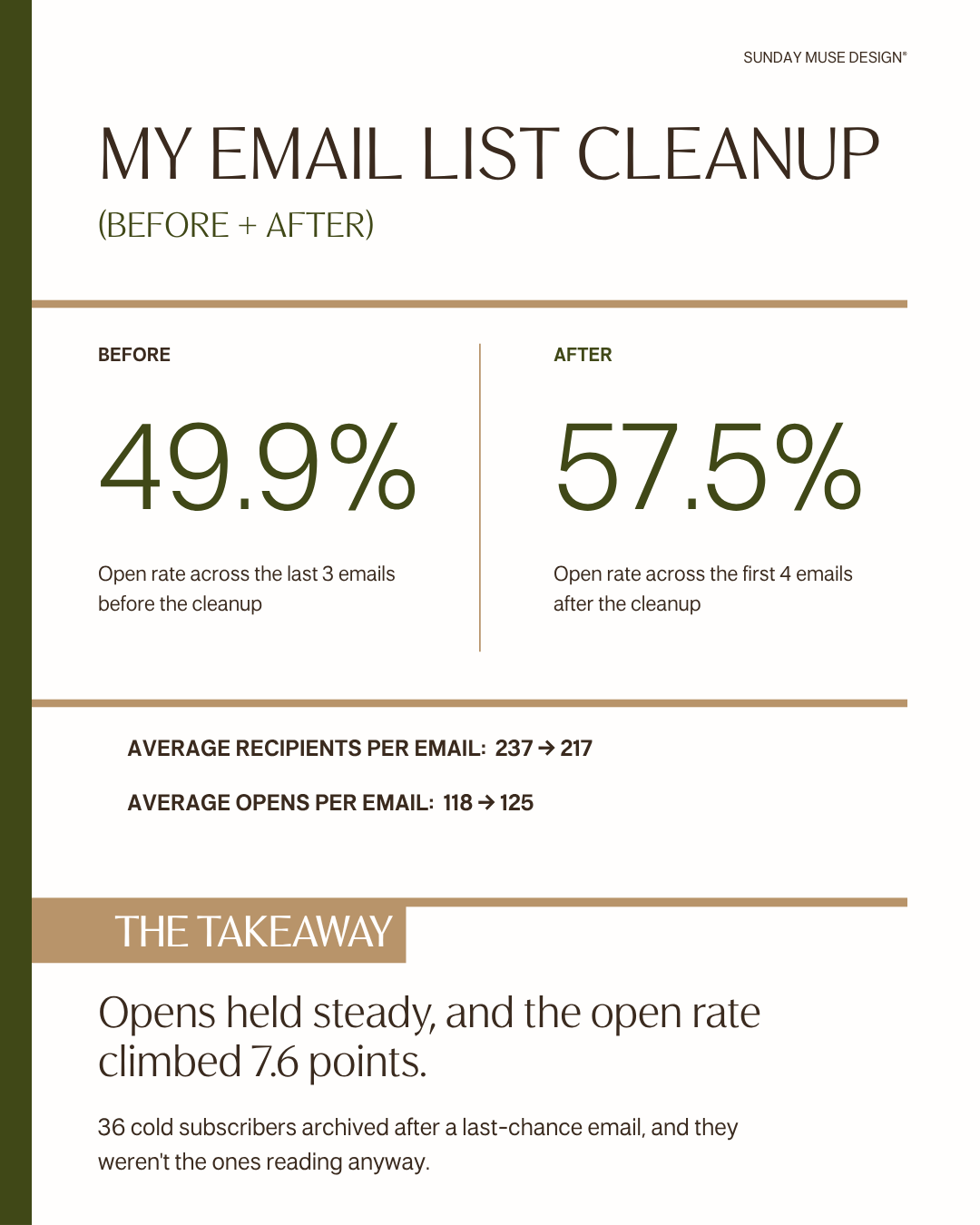
My open rate went from about 50% to 57.5%, and the number of people opening each email held steady. These are the numbers from my Flodesk account, comparing the last three emails before my April cleanup with the first four after it:
| Before (Mar 24–31) | After (Apr 2–8) | |
|---|---|---|
| Average recipients per email | 237 | 217 |
| Average opens per email | 118 | about 125 |
| Open rate | 49.9% | 57.5% |
The opens per email even ticked up a little, which tells me the 36 people I moved out weren't the ones reading. My open rate rose because the math finally matched who was there.
If you clean your list and your open rate jumps, check your open count too. If the count held steady, you moved the right people.
I ran a smaller round in July that moved 8 more people. Then in October, I followed the Deliverability Center's list warming recommendation (more on that below), and my newsletter's open rate held right where it had been: 54.0% across the six sends before and 54.5% across the four after.
How do I know which subscribers are cold?
A cold subscriber is someone who hasn't opened or clicked anything you've sent in several months. Flodesk has a built-in segment called Unengaged subscribers that finds people who haven't opened or clicked in 180 days, have received more than five emails in that time, and joined more than 180 days ago.
I exclude that segment from my Client Brief, the monthly email that only goes to past and current clients. For my bigger quarterly cleanups, I pull everyone cold into one segment and send them a last email asking if they'd like to stay. Anyone who clicks stays, and I archive everyone else.
What is the Flodesk Deliverability Center?
The Flodesk Deliverability Center is one spot in your account for domain authentication, a compliance checklist, audience health, list cleaning, and list warming. Domain authentication was already in Flodesk, and the Center adds context and clear next steps so you know what to do about each piece. You'll find it in the left-side navigation of your main Flodesk dashboard.
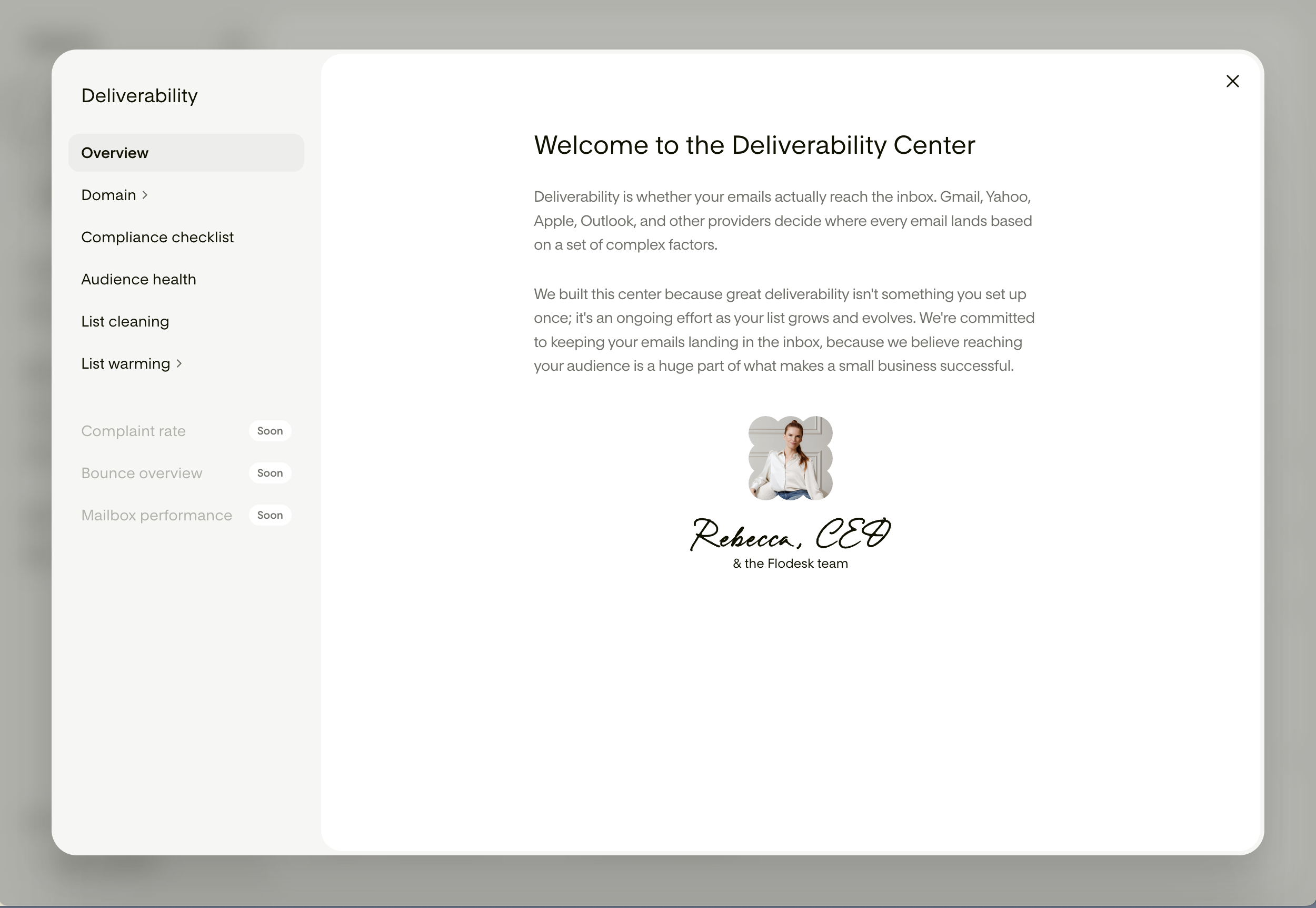
The Center has five tabs, and I went through all of them on my own account. Each section below answers the question that tab is built for, with what mine showed.
Do I need to authenticate my domain?
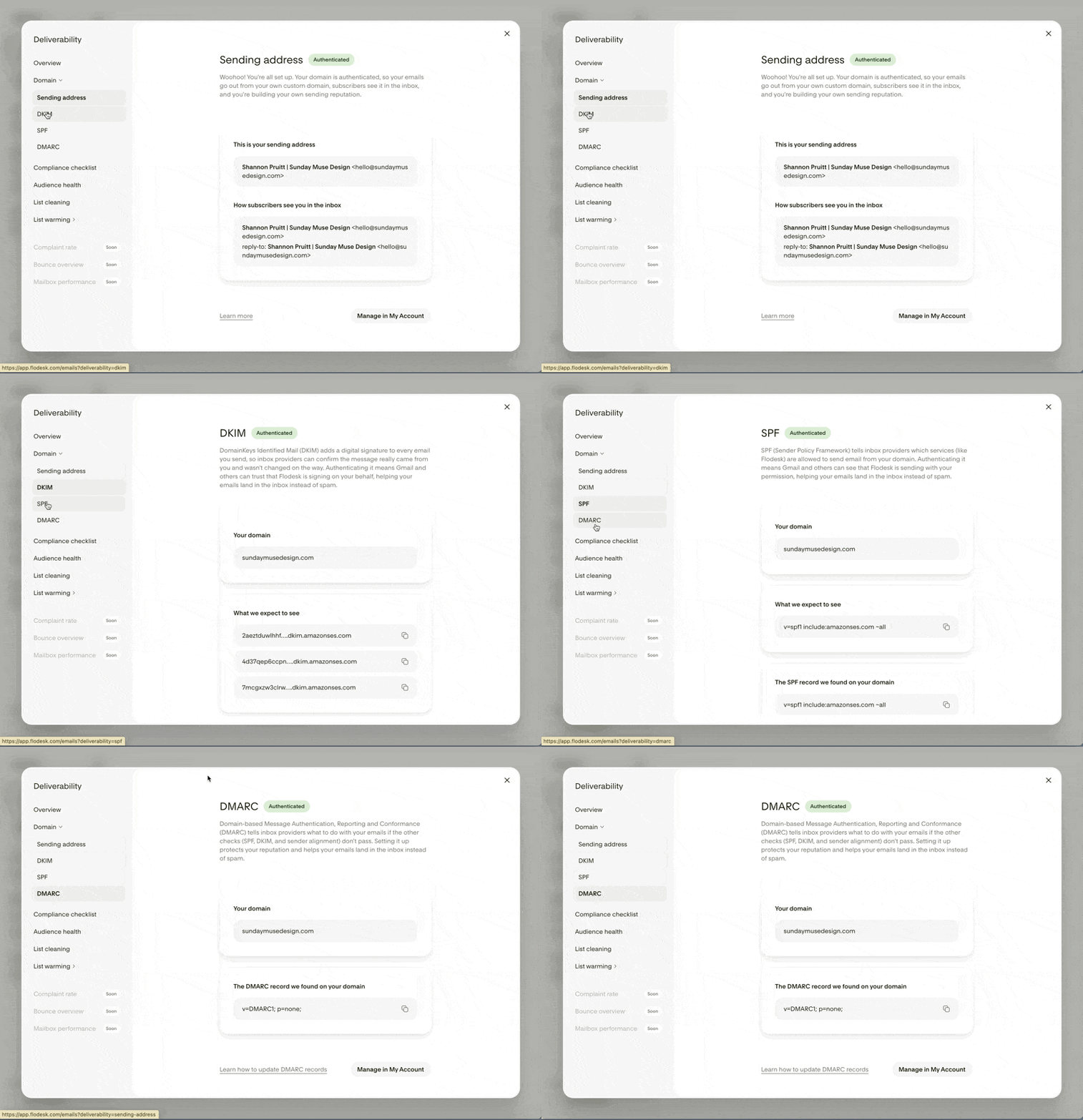
Yes, if you send from a business email address like hello@yourbusiness.com. SPF, DKIM, and DMARC are records that prove to inbox providers that you are who you say you are. In the Deliverability Center, all three show as authenticated on my account.
What's on the Flodesk compliance checklist?
The compliance checklist covers six sending basics: one-click unsubscribe, unsubscribes honored within 24 hours, encrypted delivery (TLS), verified sending servers, reverse DNS, and properly formatted emails (RFC 5322). My account is compliant on all six, so this tab took me about thirty seconds.
How healthy is my email list?
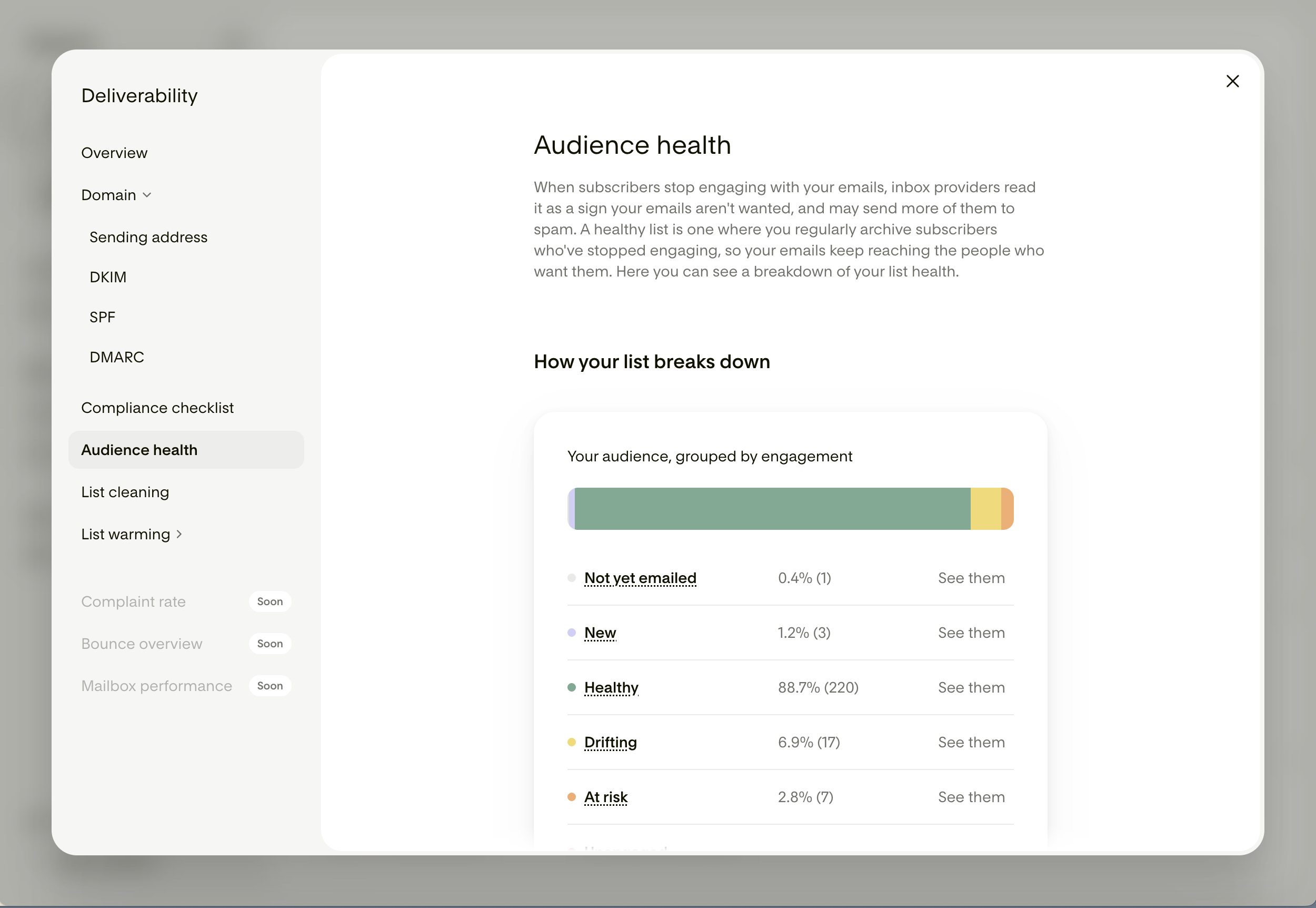
The audience health tab sorts your subscribers into groups by how recently they've engaged, and a See them button beside each group shows you exactly who's in it. Mine shows 221 healthy subscribers, 16 drifting, 7 at risk, 3 new, 1 I haven't emailed yet, and zero unengaged. That zero is my favorite number on the whole page, and it comes straight from the April and July cleanups.
Which list cleaning level should I choose?
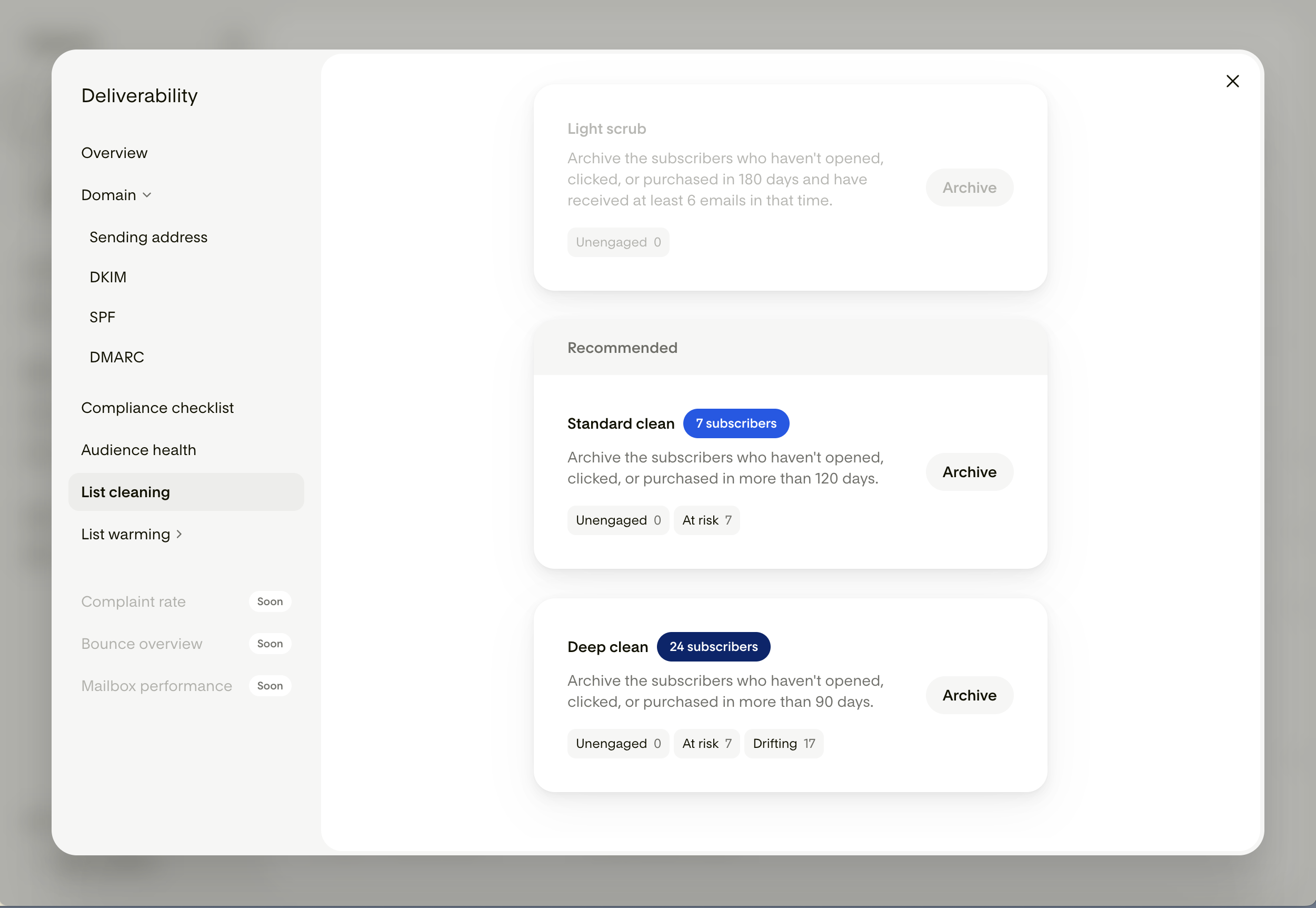
Flodesk gives you three levels: light scrub, standard clean, and deep clean. Each level archives subscribers who haven't opened, clicked, or purchased in a set amount of time, and each one shows how many people it would archive before you choose. A light scrub archives subscribers with no opens, clicks, or purchases in 180 days who have received at least 6 emails in that time. A standard clean archives anyone with no opens, clicks, or purchases in more than 120 days, and a deep clean shortens that to 90 days.
On my list, the light scrub has nobody to archive. A standard clean would archive 7 people, which matches my at-risk group, and a deep clean would archive 23, which pulls in my drifting group too. I just warmed my list in October, so I'm watching those groups for now. When I do run one, it helps to know nobody is deleted and you can undo a clean.
What does it mean to keep your subscribers warm?
Keeping your subscribers warm means emailing them often enough that they keep opening, so a big send never shows up out of nowhere. List warming in Flodesk splits your list into warming segments so you can send to smaller groups first.
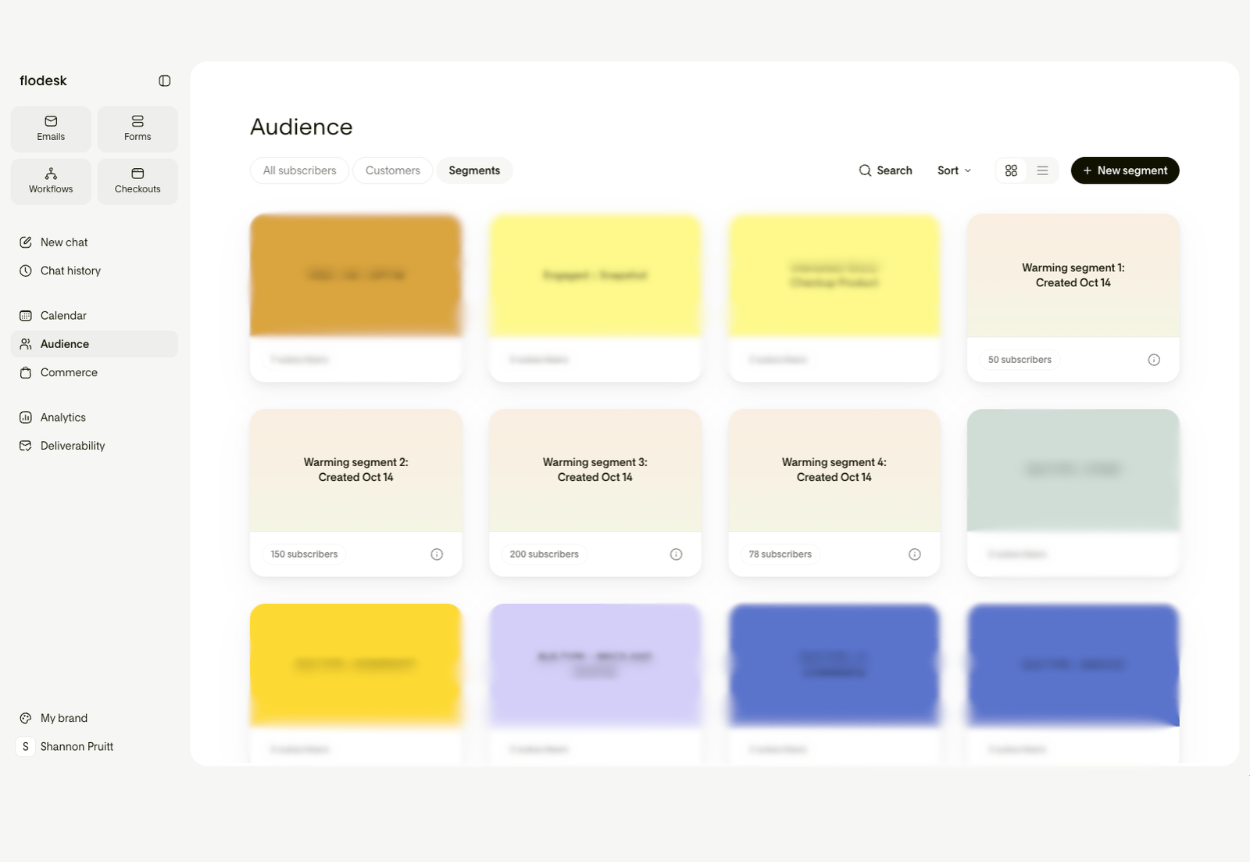
I used it in October before sharing my Brand Vibe Quiz. I followed the Deliverability Center's recommendation, split my list into four warming segments starting with a first group of 50, and sent the same email to one segment at a time on October 14, 16, 18, and 20. The first group of 50 opened at 94%, and the next group of 149 opened at 53%. The third group of 27 opened at 15%, which puts them first on my watch list for my next cleanup. The last group of 17 opened at 63%.
Does a bigger email list cost more on Flodesk?
On Flodesk's unlimited plans, it doesn't. Starting November 10, 2026, Flodesk is one flat price with unlimited subscribers and unlimited emails, with two plans:
Unlimited Email (with a monthly subscription, it's $46/month) and
Unlimited Everything (with a monthly subscription, it's $99/month), pricing as of November 10, 2026.
My bill stays the same whether I clean my list or skip it, so every clean I run is about one thing: getting my emails to the people who open them. You can start through my Flodesk partner link.
How often should I clean my email list?
Every three to four months works for a small list like mine, plus anytime your open rate dips for a few sends in a row. I put it on my calendar at the start of each quarter, right next to the other boring and important tasks that keep a business running.
One habit to copy this week: before your next email goes out, add Flodesk's Unengaged subscribers segment as an exclusion. It takes about ten seconds, nobody leaves your list, and your next open rate will show you how much of your list is reading.
Frequently asked questions
Does cleaning my list in Flodesk delete subscribers?
No. List cleaning moves unengaged subscribers out of your active list. Nobody is deleted, and you can undo it.
Can I undo a list clean in Flodesk?
Yes. If you move someone out and change your mind, you can undo the clean.
What do SPF, DKIM, and DMARC do?
SPF, DKIM, and DMARC prove to inbox providers that you are who you say you are. They help Gmail, Yahoo, and Outlook trust that an email from your business address came from you.
How big are Flodesk warming segments?
Warming segments start at 50 subscribers. My first warming segment had exactly 50 people in it.
Will my open rate always go up after I clean my list?
Usually, because you stop counting people who weren't opening. Check your open count next to your open rate: if the count stays steady while the rate rises, the clean did its job.
Where can I get more posts like this?
My Tuesday newsletter, The Muse Memo, shares what I'm seeing in branding, websites, and marketing for hospitality-first businesses, every week. Join The Muse Memo →
And when your emails send people to your website, your website has to finish the conversation. If you're not sure yours does, the Sunday Snapshot is where I'd start.